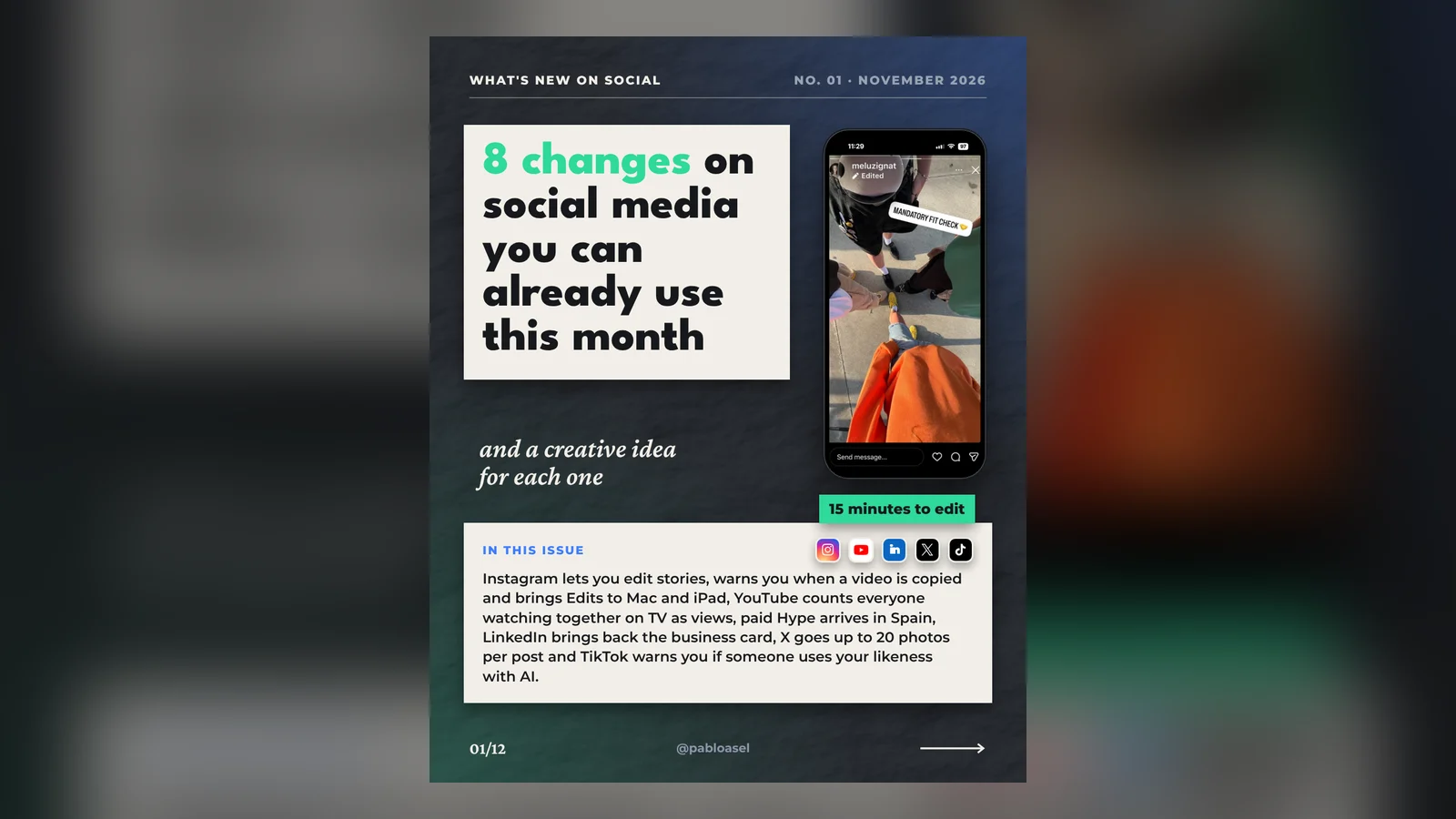
Five social media shifts I’m seeing
What I see on social media day to day, and what I would do if I ran the accounts of a small brand.
In this article
Working with social media every day, you notice shifts that don’t always make it into the reports. This doesn’t come from a study. I see it in the accounts I’ve managed, in the ones I follow every day and in the competitor research I do constantly.
There are five shifts, and for each one I explain what I’d do if tomorrow I had to run the social accounts of a small brand on a tight budget.
1. Social media is the new search engine
Many people, especially younger ones, no longer search Google for where to eat, what to watch or what to buy. They search on TikTok or Instagram. They type into the app’s search bar and watch the videos that come up.
This changes how you write on social. Before, the text of a post was almost decoration. Now it’s what lets people find you. Working on a website’s SEO, with articles that reached the top spot on Google in Spain for their keyword, I learned that the key is to write thinking about how people search, not how the brand talks. On social media it’s exactly the same.
What I’d do: write the captions, titles and what’s said in the video with what people search for in mind. If you run a café, make sure "café", your neighbourhood and what makes it special all show up.
2. Faces sell more than logos
Videos with a real person talking to camera connect more than highly produced ads. People want to know who’s behind the brand. A video shot on a phone, with good light and something to say, often works better than a piece that took weeks.
What I’d do: put the team, the founder or the customers on camera. A phone and a bit of naturalness are enough. You don’t need to be a presenter, you just need to know what you’re talking about.
3. Conversation is moving to private
Many comments and recommendations no longer happen in public, but in messages, group chats and broadcast channels. A post can do very well even with few likes, because it’s being shared privately.
That’s why, in the metrics reports I prepared every week, month and year, likes were only one part. Saves and shares say much more about whether a piece of content is genuinely useful to someone.
What I’d do: pay more attention to saves and shares than to likes, and create content people want to send to someone. A useful guide, a list or something that makes a specific group of people laugh.
4. AI helps, but judgement is still human
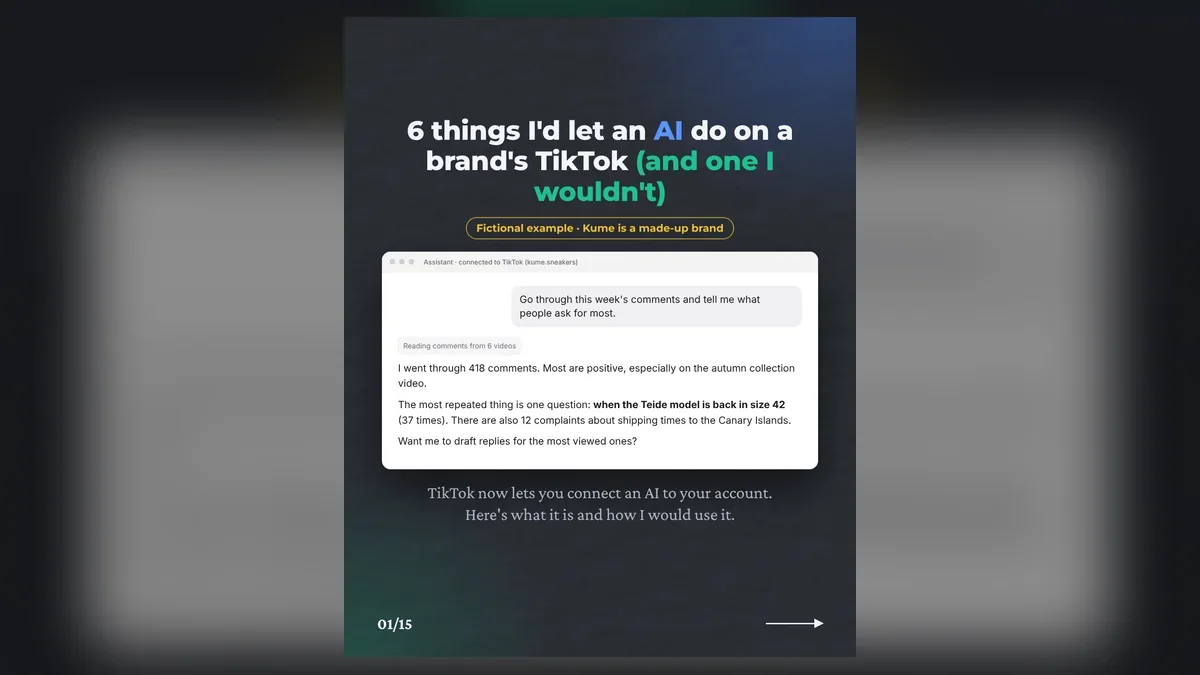
Artificial intelligence saves a lot of time on ideas, research, drafts and editing. Tools like TikTok’s Social MCP will let brands spot trends and respond much faster. But when every brand uses the same tool, they all reach the same trend at the same time, and everything starts to look alike. People notice.
Well trained, AI can answer simple customer service questions. But the community has to be run by a person, because they’re the one who understands the tone, the moment and when a reply could go wrong.
What I’d do: use it to work faster and listen better, never to replace the brand’s opinion or style. The creative side, always reviewed by hand.
5. Big moments rule
A long-awaited launch, a final, a streaming event or a big match concentrates the attention of millions of people at once. The brands that do it best aren’t always the biggest, but the ones that arrive prepared with an idea that fits the moment.
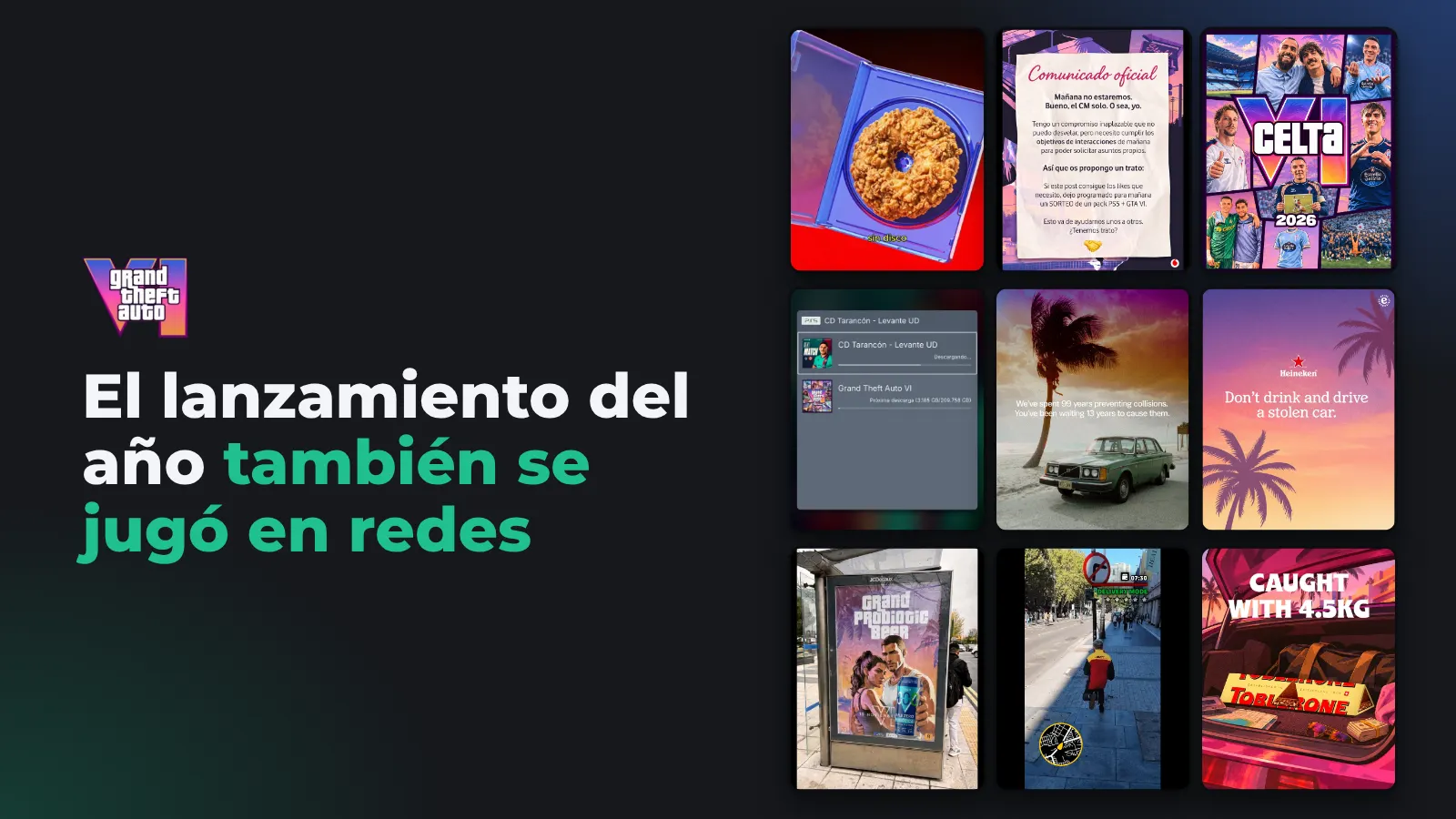
I’ve seen it analysing how brands moved around La Velada del Año or the launch of GTA VI. And I lived it planning content with the sports calendar in hand: big moments are prepared weeks in advance.
What I’d do: mark in the calendar the three or four moments of the year that matter most to your audience and prepare something for each one in good time. You don’t need to be in all of them, only the ones that make sense for the brand.
Where I’d start
If I ran a small brand’s social accounts tomorrow, I’d start with point 2: put the people on camera. It’s the cheapest thing and the one you notice fastest. Then point 1, because writing good captions costs nothing and keeps people finding you for months.
Which of these shifts are you noticing most on your accounts?
FAQ
What are the most important social media trends right now? Social media as a search engine, content with real people, private conversations, using AI with judgement and the weight of big cultural and sporting moments.
Which social network is best for a small brand? It depends on the audience. For local businesses and young audiences, Instagram and TikTok. For B2B services, LinkedIn. The important thing is to pick one or two and do them well.
Can a brand’s social media be run with AI alone? AI can help a lot with ideas, drafts and analysis, but the community and the creative work need a person to review, decide and reply.
Was this article useful?
Get the next analysis
One email when I publish something new about brands, sport, gaming and esports. No spam, unsubscribe anytime.
Comments
No comments yet. Want to be the first?
Want to talk it through? Drop me a line.
Let’s talk